Tom's Mad Blog
April 26th, 2024 | Posted in General
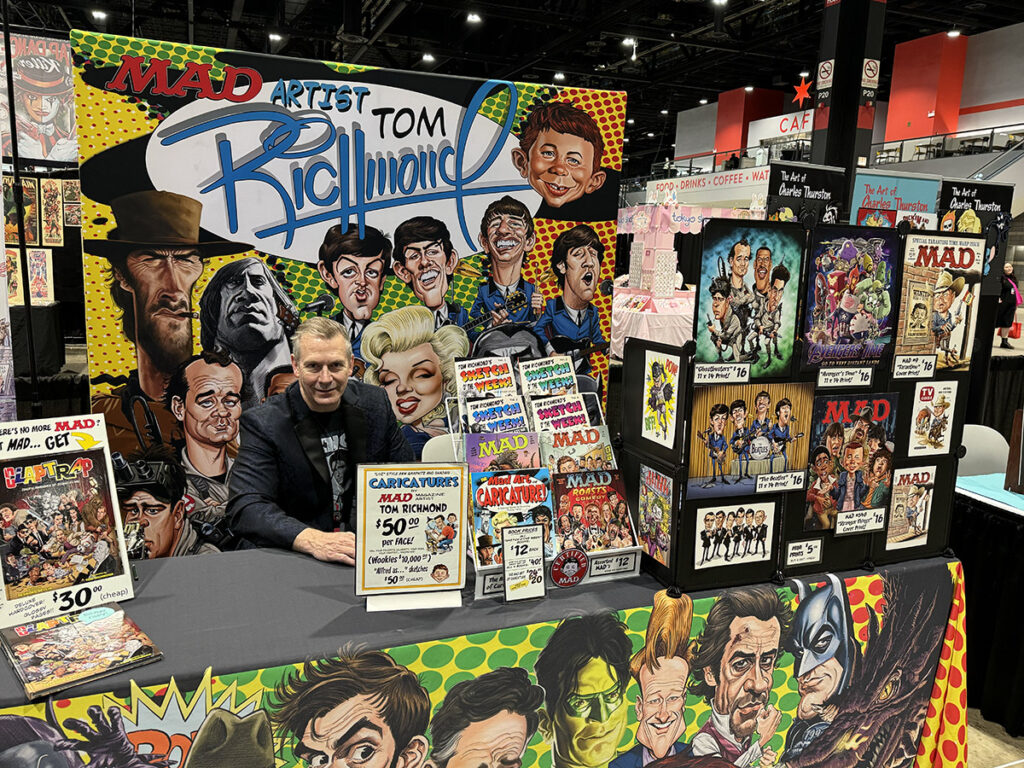 My “Virtual C2E2 Artist’s Alley” table is now open! From now through the end of C2E2, you can order the same kinds of commissions at the same prices I charge when I do a comic con. The table will close at 5pm CDT on Sunday! Visit here for the different kinds of commissions I have available. All online orders will be completed in the order in which they were placed, so the sooner you commission me to do a drawing for you, the sooner you will get it! READ MORE
April 24th, 2024 | Posted in General
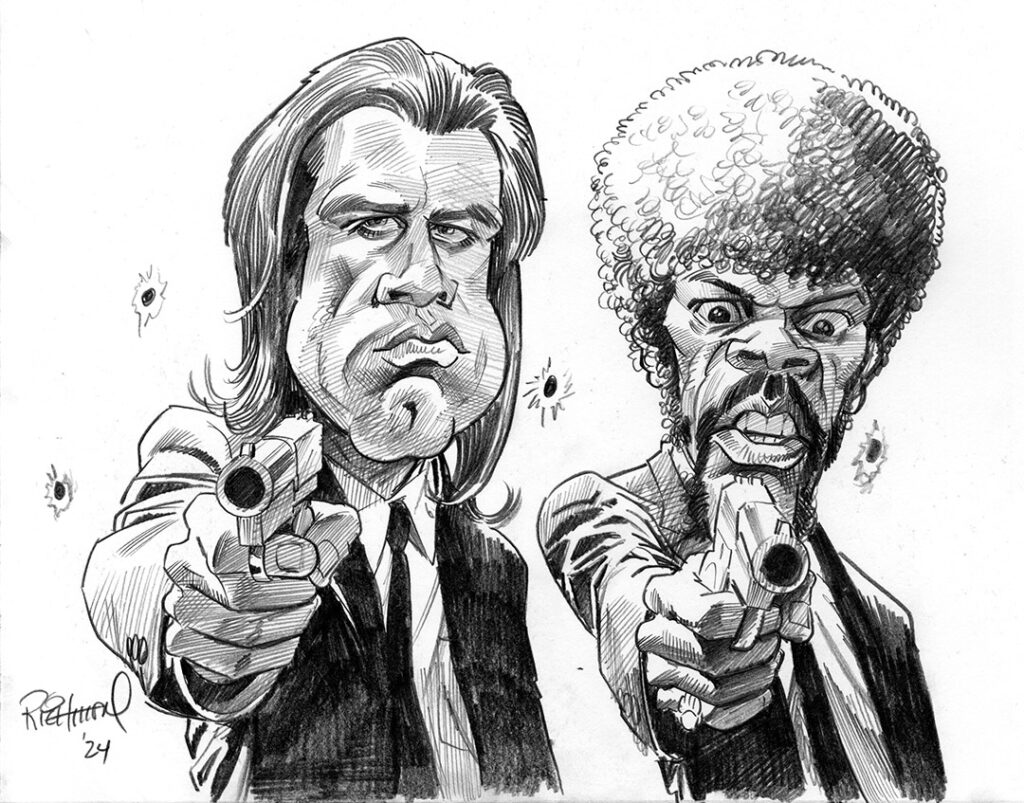 Here we go with another caricature of a famous moment in film…except this isn’t really that moment. The moment I’m referring to is the scene in ‘Pulp Fiction”, when Samuel L. Jackson‘s “Jules Winfield” recites the Bible verse Ezekiel 25:17 right before killing poor Brad and his pal. I paraphrased the moment (if you can paraphrase something in a drawing) by combining Jules’ expression during that soliloquy with the moment a few seconds later when he and John Travolta‘s “Vincent Vega” open fire on another of Brad’s pals when said pal bursts out of the bathroom and empties a handgun on them, but misses every… READ MORE
April 22nd, 2024 | Posted in MAD Magazine
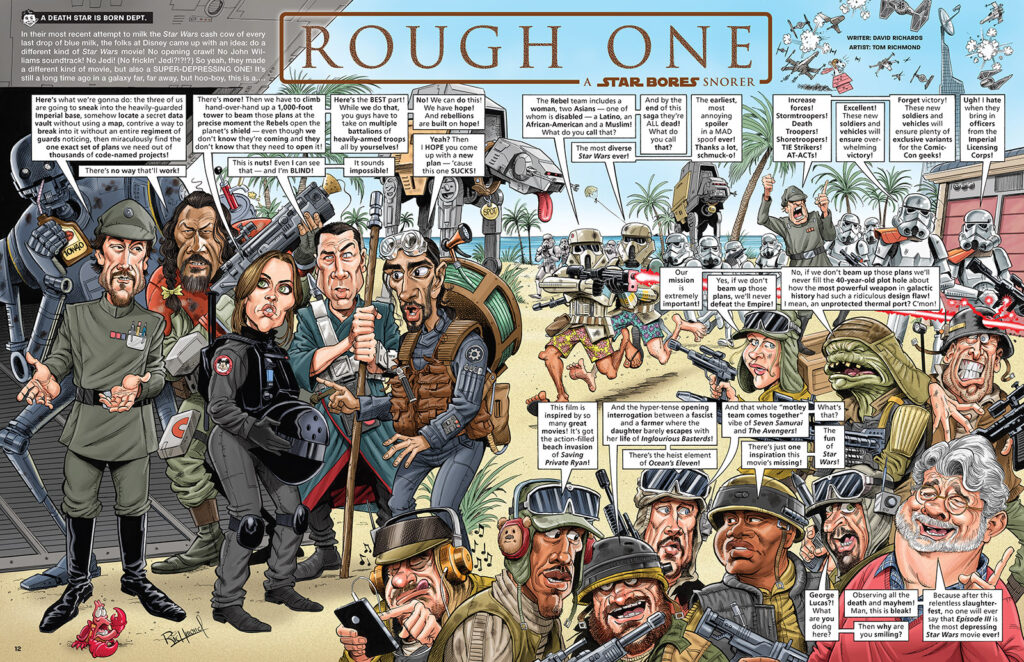 Clicky to Embiggen… A long time ago, in a galaxy far, far away… it was a MONDAY! Just like it is today right here in this galaxy! That means it’s time to embrace the Dark Side of the Farce with another look back at my work for MAD Magazine. Today we have a peek at my second chance at spoofing a Star Wars movie… MAD‘s parody of “Rogue One: A Star Wars Story”, written by David Richards and first appearing in MAD #545, June 2017. I know what you are thinking… who the %$#@& is “David Richards”?? Well, Mr. Richards wrote five pieces for MAD… READ MORE
April 19th, 2024 | Posted in News
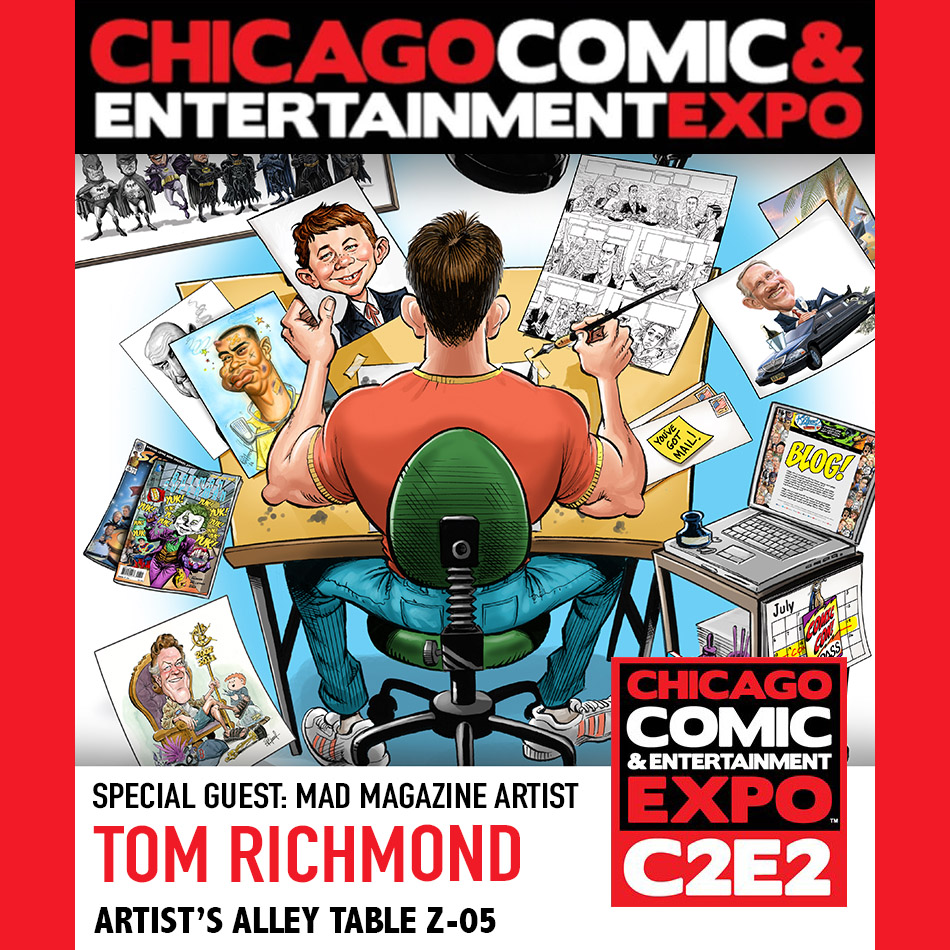 I’ll be in Artist’s Alley at C2E2 in Chicago starting one week from today! Come find me at table z-05 where I will have lots of copies of CLAPTRAP, some other new stuff, and I’ll be doing commissions on the spot! For those of you who can’t make it to C2E2, I’ll also be doing one of my “Virtual Artist Alley” tables through the Studio Store here on my website. This is where I offer the same kind of comic con commissions at the same prices, which I only do when I do these simultaneous online “tables”. The virtual AA Table will open at 10:00… READ MORE
April 17th, 2024 | Posted in Sketch O'The Week
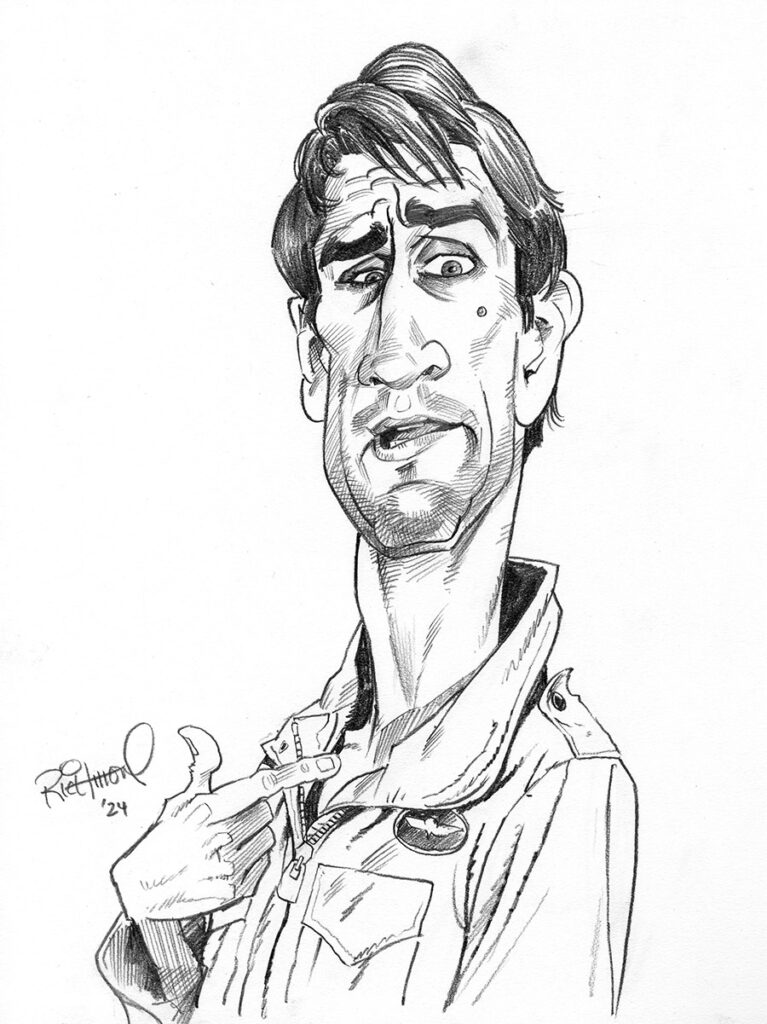 Remember how I promised threatened to start a new series for the SotW based on famous moments in movies? Bad news… it’s started! This week’s movie moment is Robert De Niro as “Travis Bickle” in the famous “are you talkin’ to me?” scene from “Taxi Driver”. This might be the most often and badly imitated scene in all of movie history… well, this and any Sean Connery impression. Oh, and before I get a flood of responses to this telling me I put De Niro’s mole on the wrong side of his face, remember this scene takes place in a MIRROR! READ MORE
April 16th, 2024 | Posted in General
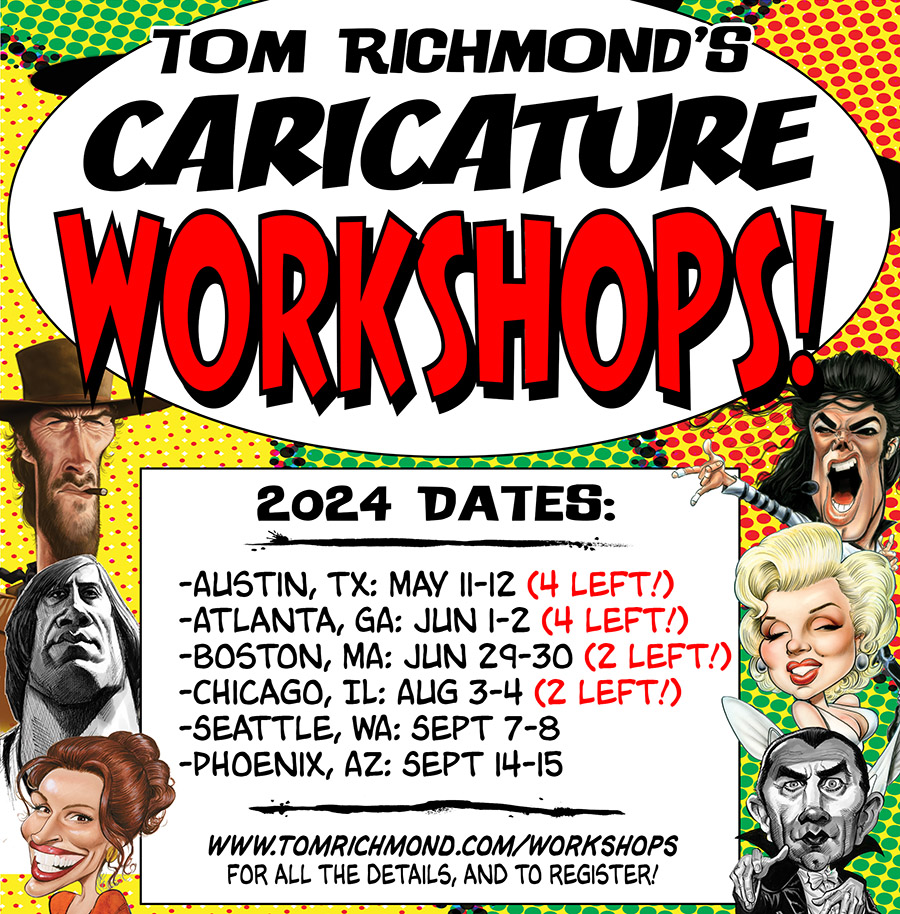 My 2024 workshops are starting to fill up. Plenty of room left in the two September classes but the others are getting full, especially Boston and Chicago! Grab your spot while you can! READ MORE
April 15th, 2024 | Posted in MAD Magazine
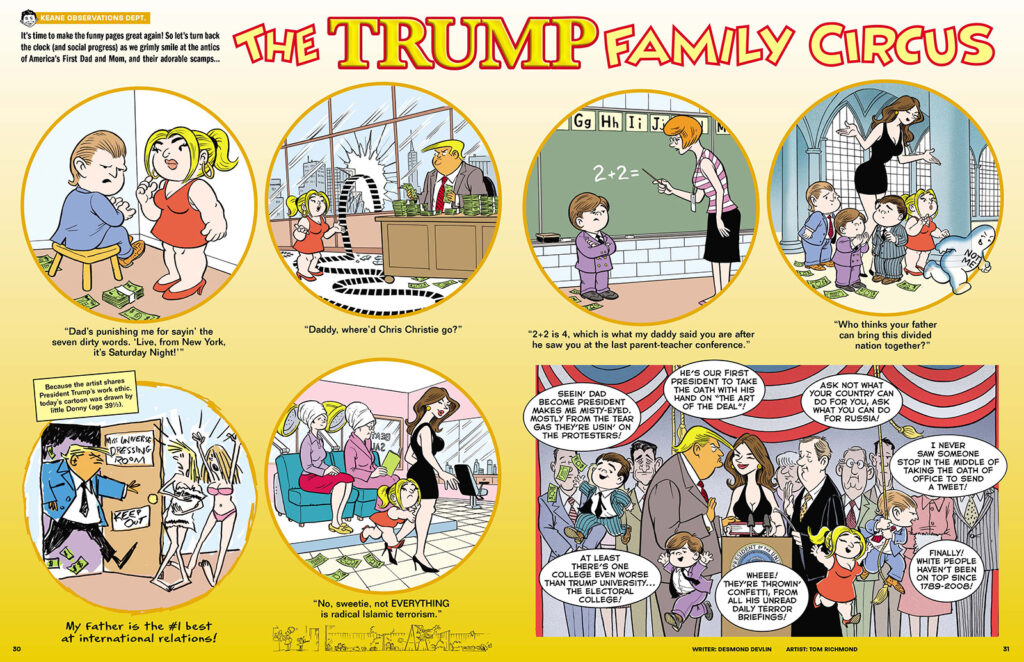 It’s another nauseating Monday MADness as we chronologically look back at my work for MAD Magazine! We are nearing the end of the New York MAD era with this peek at a piece I did for MAD #544 (April 2017) called “The Trump Family Circus”, written by my CLAPTRAP cohort Desmond Devlin! Mimicking Bil (and later Jeff) Keane‘s art style was nothing new for me. Just a few years earlier I did a similar job for MAD #520 called “Honey Boo Boo’s Family Circus”, but that one was written by Frank Santopadre. Most of the interesting things about a job like this I wrtoe about… READ MORE
April 11th, 2024 | Posted in General
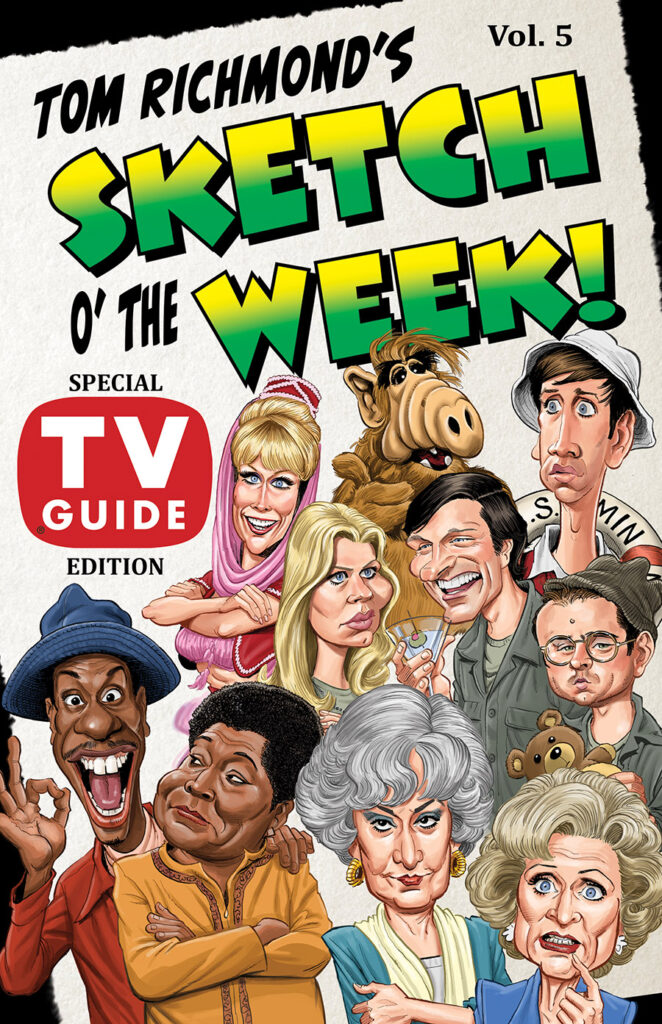 My “Sketch o’the Week Vol. 5: Special TV Guide Edition” is at the printer and should land on my doorstep the first week of May. This is a new collection of sketches and caricatures from my “Sketch o’the Week”, and this volume is themed around classic and current television shows and stars, many of which you have seen posted right here on Tom’s MAD Blog! The book contains over 150 caricatures over 62 pages, and is now available for pre-order! Well, what are you waiting for, schmuck?? READ MORE